





To Be or Not to Be

Q. “One type of sorcerer in the Torah is called an ov. An ov takes a human skull and chants incantations until his client hears a voice emanating, answering the client’s questions. One who does this is liable to stoning.” Would Macbeth be liable when he holds up the skull asking for a response?
A. Thanks for your question. First of all, I believe you mean Hamlet rather than Macbeth. Second of all, Hamlet doesn’t hold a skull during his famous soliloquy, “To be, or not to be….” That soliloquy appears in Act III, while the skull is a prop in the graveyard scene in Act V. The skull is that of Yorick, the court jester, and Hamlet laments to his companion, “Alas, poor Yorick! I knew him, Horatio, a fellow of infinite jest….” Since “to be, or not to be” is the most famous thing that Hamlet says and holding a skull is the most famous thing that Hamlet does, the two are popularly conflated but that’s not what the play actually calls for.
Now let’s say that a director were to give the people what they expect and have Hamlet holding a skull while he ponders “To be, or not to be.” It still wouldn’t violate the Biblical prohibition against necromancy because Hamlet would not be asking the question of the skull (nor anticipating a response). He’s still just pondering life and death and the skull in such a case would be a powerful, if gruesome, visual aid.
[For the sake of completeness, there is a ghost in Hamlet, but Hamlet doesn't summon it, so he could hardly be accused of necromancy.]
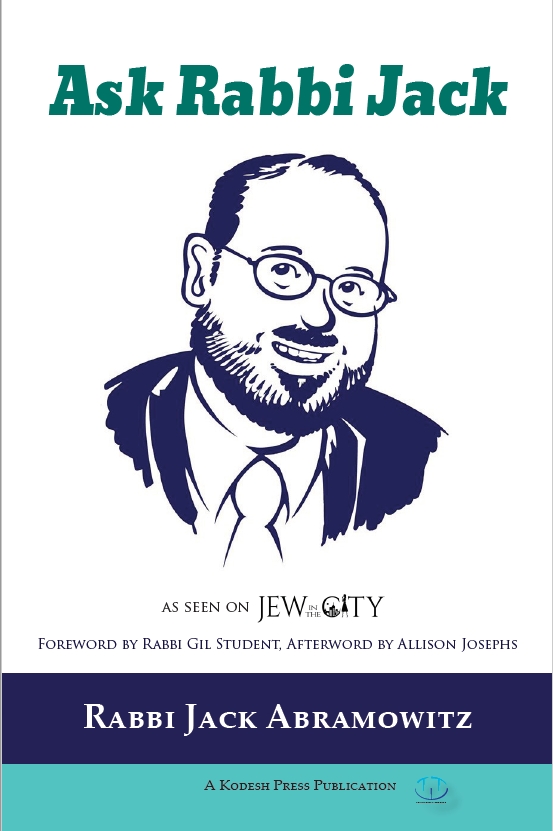
Rabbi Jack's book Ask Rabbi Jack is available from Kodesh Press and on Amazon.com.
Next In This Series